To understand the probability of damage from recoil to your rangefinder, we must take into account how much force is being applied by common rifle cartridges like the .308, how that force is distributed, and roughly how close that comes to the amount of force necessary to actually damage your rangefinder.
How much force?
The amount of force is not that great. For example, in the case of a .308, the cumulative force of the recoil is about equal to the force of you picking up your rangefinder and squeezing it hard for a few thousandths of a second.
How is the force distributed?
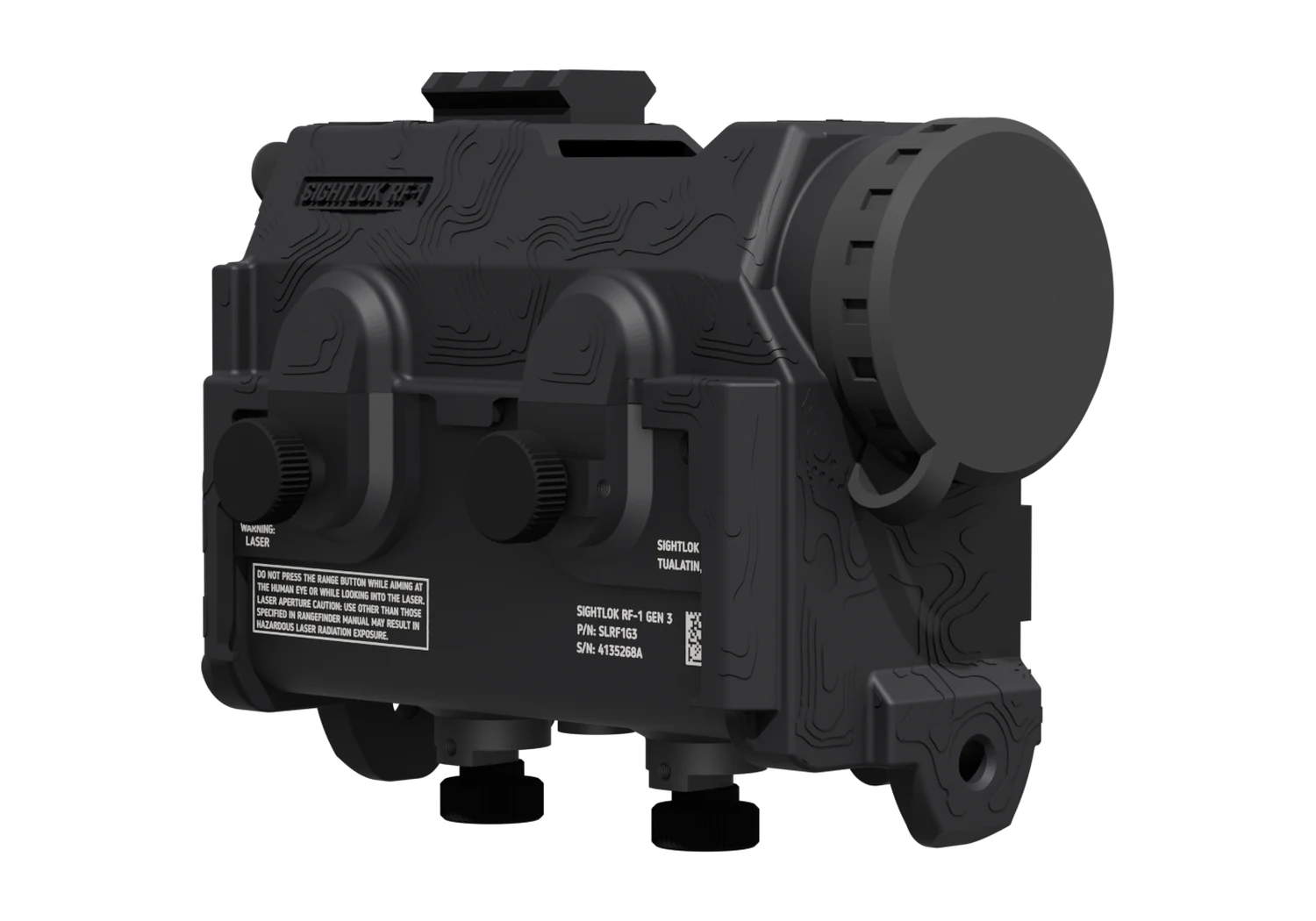
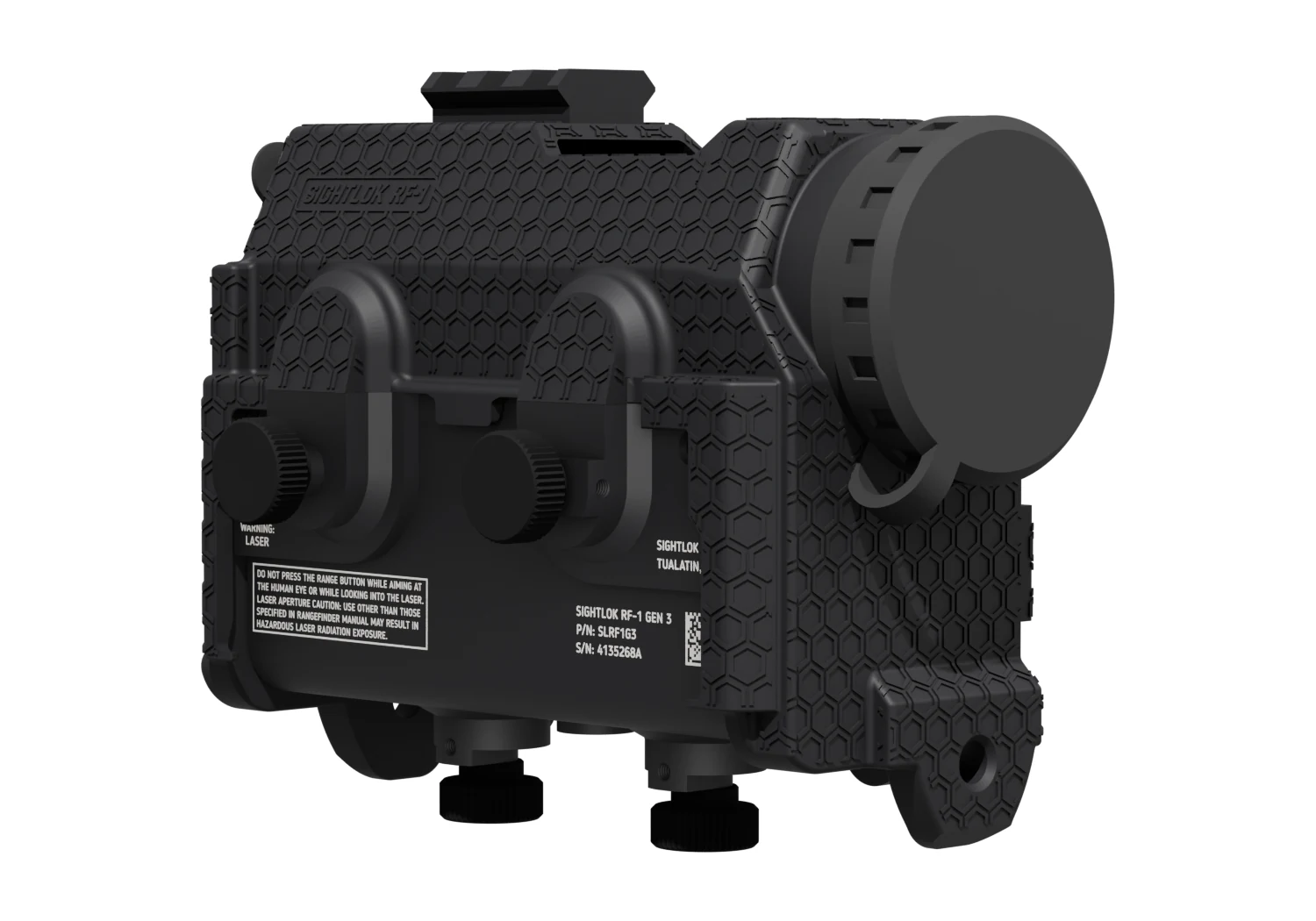
Beyond the actual amount of force is an even more critical factor: How the force is distributed. The Sightlok RF-1 uses 3M impact-absorbing rubber to hold the rangefinder and evenly distribute the recoil forces while simultaneously shielding sensitive areas like the buttons, the laser aperture lenses, the ocular, and the ocular lenses from impact. Lastly, when the rangefinder is held in the RF-1 mount, recoil force travels straight back along the bore axis, rather than to corners or edges where impact forces can cause more damage. The result of these mitigating factors is that recoil generates about the same amount of pressure on your rangefinder as you exert when you press the range button.
Typical standards for rangefinder durability
Handheld rangefinders are designed to survive drops of about 3 feet, and the impact from a 3-foot drop can generate several thousand psi of pressure.
How close does recoil come to causing damage?
The RF-1 spreads recoil so evenly that no spot on your rangefinder takes more pressure than your thumb puts on the range button, a few dozen psi at most. A few dozen psi is well under 1% of the pressure your rangefinder is built to survive in a 3-foot drop. At that margin, the chance of a .308 shot damaging a healthy rangefinder in the RF-1 is effectively zero.
No reported failures
In two years of selling the Sightlok RF-1, no customer has reported a rangefinder damaged by recoil.
Recoil tests on video
Below, a US military rifleman tests the Sightlok RF-1 with recoil from two common cartridges.
Sig Sauer KILO1000BDX versus .308 rifle recoil:
Sig Sauer KILO1000BDX versus 6.5 Creedmoor rifle recoil:
A: There are 3 ways to accomplish this:
1. Simple method
Point scope crosshairs at a target at the approximate distance you intend to shoot. Stabilize shooting platform so the scope doesn’t move. Use the windage and elevation knobs on the mount to point the rangefinder reticle at the same aiming point as the scope reticle. Re-verify scope reticle has not moved from the target. Verify rangefinder reticle matches aiming point of scope. For extra accuracy, measure the distance between center of scope occular lens and the center of rangefinder occular lens, and maintain rangefinder point-of-aim parallel to scope crosshairs to prevent point-of-aim divergence over large distances.
2. More accurate method
A more accurate method is to have a target at the approximate distance you intend to shoot, where you have a much longer distance behind the target to use as a contrast. Point scope at the edge of the target. Adjust rangefinder so that it detects the point at which aiming point goes off the edge of the target both horizontally and vertically. Fire rangefinder while moving off the edge of the target. The rangefinder should be aligned so that it switches to displaying the much longer distance behind the target just as scope crosshairs move off the edge of the target. Again, for extra accuracy, measure the distance between center of scope occular lens and the center of rangefinder occular lens, and maintain rangefinder point-of-aim parallel to scope crosshairs to prevent point-of-aim divergence over large distances.
3. Most accurate method – requires digital night vision clip-on like the PARD NV007
Third method is to use a clip-on digital night vision scope like a PARD NV007 or the cheaper “DIY” Night Vision scopes priced around $100. Digital night vision shows the infrared spectrum used by the rangefinder, so the laser from the rangefinder becomes visible flashing on the target. This makes windage and elevation adjustment for the rangefinder easy and precise. Again, for extra accuracy, measure the distance between center of scope occular lens and the center of rangefinder occular lens, and maintain rangefinder point-of-aim parallel to scope crosshairs to prevent point-of-aim divergence over large distances.