Q: Should I buy an Arken TL3000?
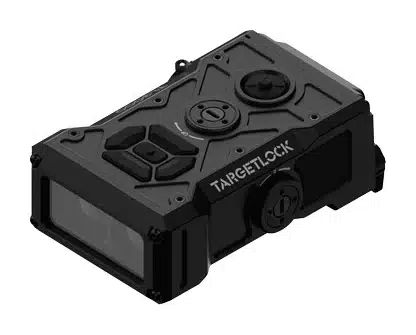
A: Short answer: Hell no! Not a chance! Especially if you want to fill your freezer when hunting season rolls around. This review explains why we’re not fans of the Arken TL3000, and lists a potentially better alternative for you to consider.
Q: What problems does the Arken TL3000 have?
A: These are the Arken TL3000’s four biggest problems:
A ballistic calculator no one outside Arken has tested. Buying one of these phony Chinese ballistic calculators is, until proven otherwise, the equivalent of buying a fake Chinese iPhone. More info here.
Angle compensation no one has proven. The ballistic calculators on DNT’s own scopes ignore shooting angle, and on a steep uphill or downhill shot, a calculator that ignores the angle can make you hit high. More info here.
No built-in environmental sensors. The Arken TL3000 can’t measure temperature, pressure or humidity, so you depend on your mobile phone or a Kestrel to get that data. More info here.
No published beam divergence. Arken doesn’t publish a beam divergence figure for the Arken TL3000, versus 1.4 MRAD for the $130 Sig KILO2200 handheld. More info here.
Q: What’s the best alternative to the Arken TL3000?
A: A handheld rangefinder that runs Applied Ballistics, mounted on your rifle with a Sightlok RF-1. See the alternative and how it compares with the Arken TL3000.
👉 Below you’ll find the full breakdown of each problem and answers to the questions buyers ask most.
Or jump straight to an answer: Is the Arken TL3000 worth it? · How far can the Arken TL3000 actually range? · If I don’t already own a good handheld rangefinder, which one should I use with the Sightlok RF-1? · See all FAQs
1. The Arken TL3000’s Ballistic Calculator Is, Until Proven Otherwise, Like a Fake Chinese iPhone
Who Makes the Arken TL3000’s Ballistic Engine?
The Arken TL3000 runs the DNT Ballistic Engine. DNT is Arken’s sister company, and DNT makes its scopes in China.
Why the Ballistic Software Matters More Than the Hardware
Let me ask you this:
Would you buy a knockoff iPhone from China? Or a phone running fake Android? It boots up and says “iPh0ne” instead of “iPhone.” The screens look similar, and the Apple logo on the back looks a little off. None of the real Apple apps are on it. I don’t think anyone in their right mind would go for that.
You’re not buying the phone for its case, you’re buying it for the software, and the software has to be the genuine article. A weapon-mounted laser rangefinder works the same way. The housing, the laser and the display only get you a distance. The ballistic calculator turns that distance into your holdover, and that holdover puts your bullet on the target or off it.
Why Applied Ballistics Is the Trusted Name
Applied Ballistics has spent years building its ballistic engine and checking it against real shots in the field. Even the U.S. military trusts Applied Ballistics. Applied Ballistics devices are in use with U.S. and allied armed forces, and a U.S. Defense Department office paid Applied Ballistics $1.3 million to measure military service rounds with Doppler radar at extreme long range.
Would the U.S. military trust a ballistic engine built by engineers in China who have almost certainly never shot a rifle or measured the trajectory of a real bullet? In China, private citizens generally can’t own rifles. The only exceptions are licensed hunters and herdsmen in designated areas and some ethnic minorities. China has no shooting culture like the one in the United States. Companies like Applied Ballistics live and breathe this stuff.
Who Has Tested the DNT Ballistic Engine?
Arken’s only published comparison is a chart on its product page. Arken compared the DNT app with the Applied Ballistics Quantum (Elite) app, using a 5.56 rifle at 100 to 1,000 yards. Arken compared two phone apps, not the Arken TL3000 in the field, and doesn’t say which wind, angle or weather conditions it entered. Arken’s blog also reposts one YouTuber’s live-fire hits at about 1,064 and 1,198 meters. A single video promoted on Arken’s own blog is not an independent test.
DNT’s ballistic calculators have caused problems before. One owner of a DNT Zulus scope, which runs a DNT ballistic calculator, reported that its holdover put him at the wrong point of impact. Another owner in the same thread blamed DNT’s confusing menu.
Wind Holds and Kestrel Pairing
Your wind hold depends on the engine too. You enter the wind speed and direction, but the engine calculates how far the bullet drifts. No one outside Arken has tested the Arken TL3000’s wind holds.
Pairing a Kestrel doesn’t fix this. The Arken TL3000 connects to Kestrel meters over Bluetooth, but Arken says the Kestrel only sends weather and wind data to the Arken TL3000’s own DNT Ballistic Engine. Even if you pair a $769 Kestrel 5700 Elite, which runs the full Applied Ballistics solver, the DNT engine still calculates your holdover. You pay for Applied Ballistics in the Kestrel, and the Arken TL3000 doesn’t use it.
Should Ballistic Calculators Have to Pass Accuracy Tests?
The DNT Ballistic Engine in the Arken TL3000 shows you numbers like any other ballistic calculator. Until real shooters prove those numbers in the field, you can’t trust the software inside it.
We’re not generally fans of regulation, but we’d almost go as far as saying that any device sold to shooters with a built-in ballistic calculator should have to pass government tests for accuracy, because if the calculator isn’t accurate, all kinds of bad things can happen. We’re talking about misguided bullets here, and that’s no joke.
What’s the Best Alternative to the Arken TL3000?
Q: What’s better than an Arken TL3000?
A: An increasingly popular solution to the “WMLRF problem” is mounting a handheld rangefinder to your rifle using a Sightlok RF-1 rangefinder mount.
The approach has some disadvantages. Overall, however, it’s a more flexible, modular, and cost-effective solution that, depending on the rangefinder you deploy, can actually deliver more accurate results in the field.
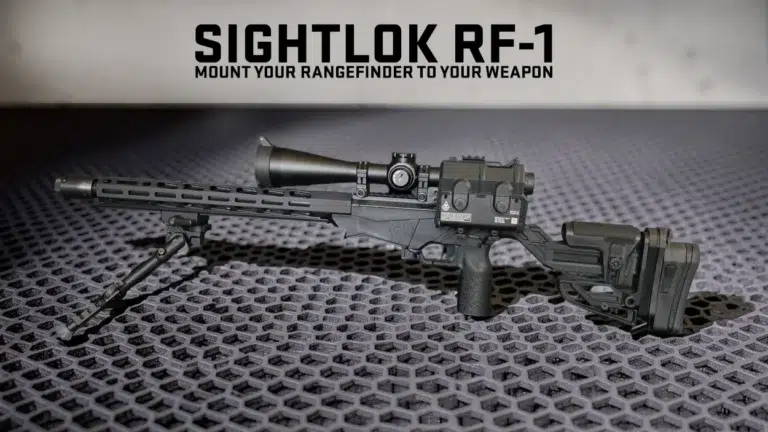
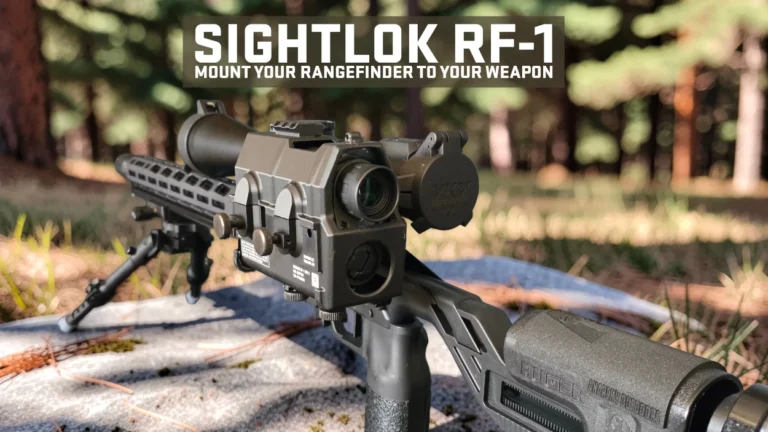
The finished setup looks like this:
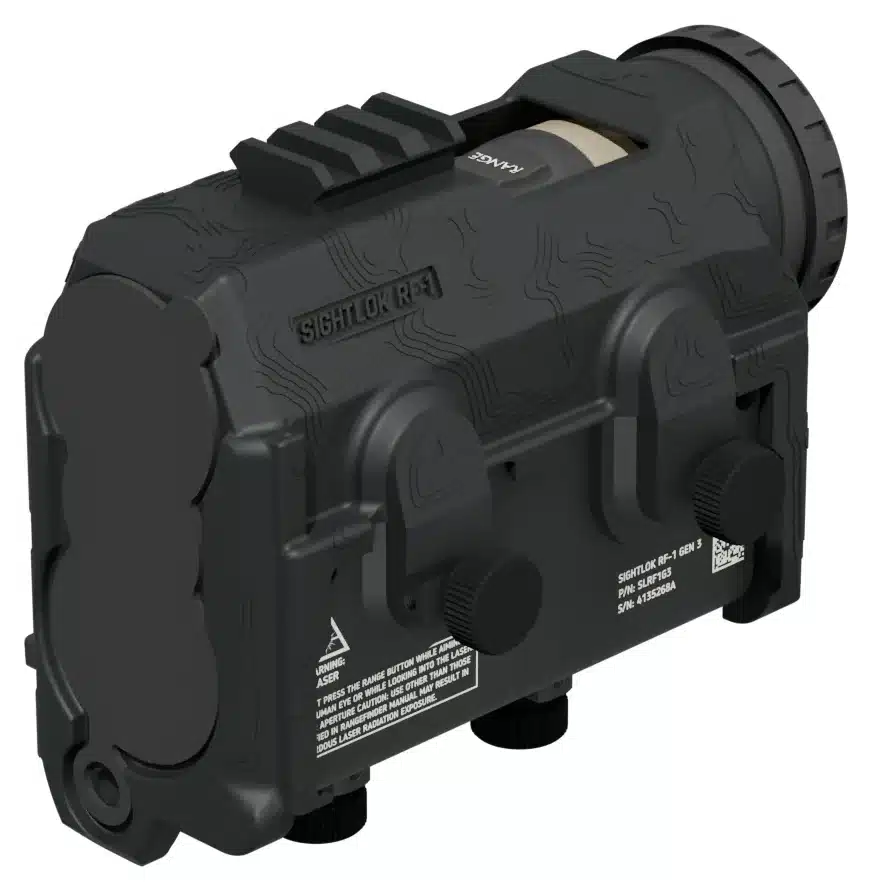
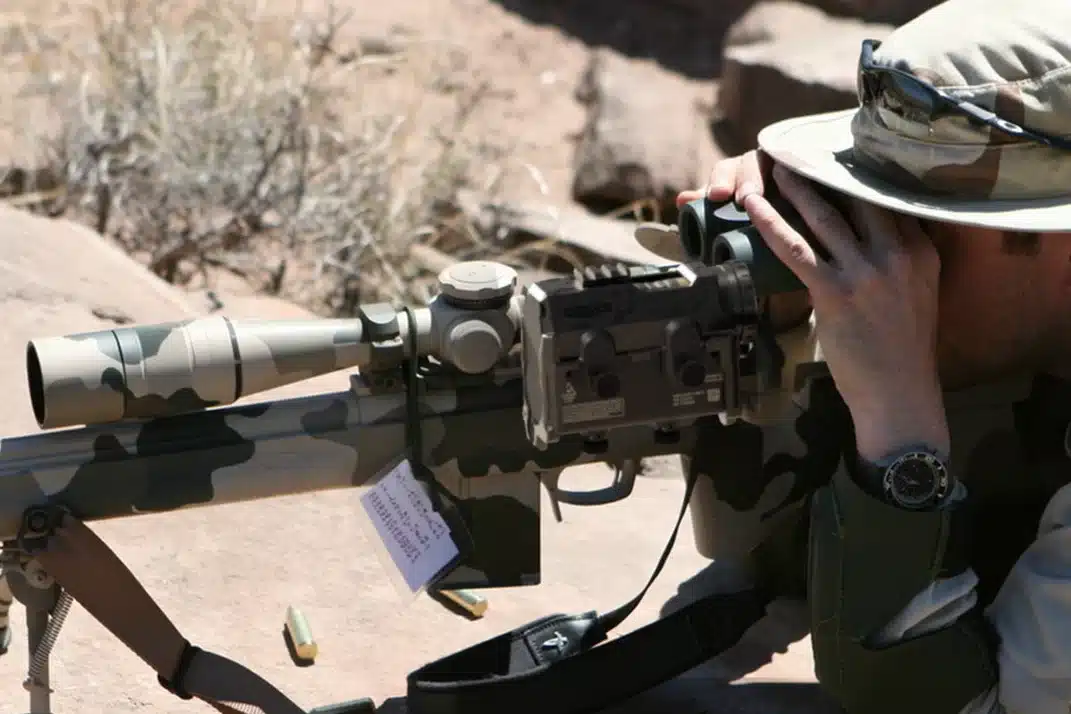
The Sightlok RF-1 protects your rangefinder from recoil, bumps, and scratches. A polymer hood protects the rangefinder as a whole, and hard rubber covers protect the laser aperture and eyepiece.
Q: What are some key advantages of the Sightlok RF-1 vs the Arken TL3000?
A:
Use a real Applied Ballistics ballistic calculator, available on most decent handhelds, not a phony Chinese knockoff
Use real laser rangefinders from trusted companies, with published specs like beam divergence
Quick Detach to range objects you don’t want to point your muzzle at
Keep rangefinder warm in your pocket until needed to avoid cold weather failures
Q: What about recoil? Can’t it damage my rangefinder?
A: Sig Sauer’s Electro-Optics division drop-tests its rangefinders from 2 feet onto a 1-inch rubber pad (70 durometer) over concrete, once on each of the 6 sides: top, bottom, objective end, ocular end, left side and right side. The rangefinder must come through with no visible damage and no malfunction. That drop puts about 55 to 190 psi on the side that lands. The RF-1 spreads recoil so evenly that no spot on your rangefinder takes more pressure than your thumb puts on the range button, a few dozen psi at most. Recoil from a .308 in the RF-1 puts about 25 psi on your rangefinder, less than half the pressure of Sig’s drop test. At that margin, recoil in the RF-1 is highly unlikely to damage a healthy rangefinder. In two years of selling the Sightlok RF-1, no customer has reported a rangefinder damaged by recoil. Read our full analysis of the recoil question and watch recoil test videos.
What about recoil? Won’t my rangefinder be damaged if I mount it to my rifle?
To understand the probability of damage from recoil to your rangefinder, we must take into account how much force is being applied by common rifle cartridges like the .308, how that force is distributed, and roughly how close that comes to the amount of force necessary to actually damage your rangefinder.
How much force?
The amount of force is not that great. For example, in the case of a .308, the cumulative force of the recoil is about equal to the force of you picking up your rangefinder and squeezing it hard for a few thousandths of a second.
How is the force distributed?
Beyond the actual amount of force is an even more critical factor: How the force is distributed. The Sightlok RF-1 uses 3M impact-absorbing rubber to hold the rangefinder and evenly distribute the recoil forces while simultaneously shielding sensitive areas like the buttons, the laser aperture lenses, the ocular, and the ocular lenses from impact. Lastly, when the rangefinder is held in the RF-1 mount, recoil force travels straight back along the bore axis, rather than to corners or edges where impact forces can cause more damage. The result of these mitigating factors is that recoil generates about the same amount of pressure on your rangefinder as you exert when you press the range button.
Typical standards for rangefinder durability
Sig Sauer’s Electro-Optics division drop-tests its rangefinders from 2 feet onto a 1-inch rubber pad (70 durometer) over concrete, once on each of the 6 sides: top, bottom, objective end, ocular end, left side and right side. The rangefinder must come through with no visible damage and no malfunction. That drop puts about 55 to 190 psi on the side that lands.
How close does recoil come to causing damage?
The RF-1 spreads recoil so evenly that no spot on your rangefinder takes more pressure than your thumb puts on the range button, a few dozen psi at most. Recoil from a .308 in the RF-1 puts about 25 psi on your rangefinder, less than half the pressure of Sig’s drop test. At that margin, recoil in the RF-1 is highly unlikely to damage a healthy rangefinder.
No reported failures
In two years of selling the Sightlok RF-1, no customer has reported a rangefinder damaged by recoil.
Recoil tests on video
Below, a US military rifleman tests the Sightlok RF-1 with recoil from two common cartridges.
Sig Sauer KILO1000BDX versus .308 rifle recoil:
Sig Sauer KILO1000BDX versus 6.5 Creedmoor rifle recoil:
Q: What about the rangefinder remote? Don’t I lose that feature with the Sightlok RF-1?
A: Yes, you do lose that feature. The Arken TL3000 has a wired remote. A Sightlok RF-1 setup typically does not have one (unless you are using a rangefinder with a wired remote like the LE032). This means rather than triggering your rangefinder with your right hand by pressing a remote switch near the trigger, you typically mount your rangefinder on the left or top of your scope, and press the range button with your left hand while holding your rifle with your right. This works fine if you shoot off a tripod, bipod, bag, etc., but it’s a disadvantage if you shoot with nothing to support your rifle except your left arm.
Q: What about weight? Does the Sightlok RF-1 solution weigh more?
A: Yes. The Sightlok RF-1 solution weighs about 9 oz more.
| Part | Arken TL3000 | Sig KILO2200 + Sightlok RF-1 |
|---|---|---|
| Rangefinder | Arken TL3000: 7.5 oz | Sig Sauer KILO2200: 7.5 oz |
| Rangefinder mount | Arken Picatinny mount: 1.5 oz | Sightlok RF-1: 7 oz |
| Quick-detach kit | Not needed | Sightlok QD accessory: about 0.9 oz |
| Protective cover | Not needed | Sightlok polymer protective cover: about 2.6 oz |
| Total | About 9 oz | About 18 oz |
| Difference | The Sig KILO2200 + Sightlok RF-1 weighs about 9 oz more | |
So with the Sightlok RF-1, you carry an extra 9 ounces.
2. No One Has Proven That the Arken TL3000 Compensates for Shooting Angle
The ballistic calculators on DNT’s own scopes don’t account for shooting angle. When we asked DNT about it, DNT wouldn’t give us a straight answer.
Arken says a gyroscope in the Arken TL3000 measures the incline angle and feeds it into the ballistic calculation. Arken hasn’t published a single test showing that this works on a real uphill or downhill shot. Until someone proves it, assume it doesn’t.
A calculator that ignores the angle gives you a holdover for the full line-of-sight distance. On a steep uphill or downhill shot, that holdover is too high, so your bullet hits high. On a big game animal, a high hit can mean a wounded animal you never recover.
3. The Arken TL3000 Has No Built-in Environmental Sensors
Arken lists no temperature, pressure or humidity sensors for the Arken TL3000. You type in the weather data or send it from a Kestrel. Sig Sauer builds environmental sensors into every BDX-enabled handheld rangefinder from the KILO3K up.
Temperature, pressure and humidity all change your firing solution. Without sensors on the Arken TL3000, you depend on your mobile phone or a Kestrel to get that data.
4. Arken Doesn’t Publish the Arken TL3000’s Beam Divergence
Beam divergence sets how much of the laser lands on your target and how much lands on the brush, trees and ground around it. Arken publishes the Arken TL3000’s ranges, accuracy and laser wavelength, but no beam divergence figure.
Here’s how the Arken TL3000 compares with three Sig handheld rangefinders:
| Rangefinder | Beam divergence | Beam pattern | Widest beam spread at 500 yards |
|---|---|---|---|
| Arken TL3000 | Not published | Not published | Not published |
| Sig KILO2200 | 1.4 MRAD | Round | 25 inches |
| Sig KILO5K | 1.3 MRAD | Round | 23 inches |
| Sig KILO8K-ABS | 1.2 x 0.25 MRAD | Rectangular, wider than tall | 22 inches |
Without a published figure, you can’t know before you buy whether the Arken TL3000’s laser will hit brush, trees and ground around your target, which can lead to potentially wildly inaccurate readings.
What the Arken TL3000 Gets Right: A Wired Remote
We’re hard on Arken’s choice of ballistic engine, but Arken got one thing right. The Arken TL3000 comes with a wired pressure switch, a proper mechanical switch that lets you range without taking your hand off the rifle. When you’re out there hunting or shooting you need to be able to pound on the range button and get a range. No fuss, no reconnections, no dead batteries, no nonsense. That’s the problem with a Bluetooth remote. Bluetooth is not suited for this task. Even the $2,000 Sig KILO WARP 6K uses a Bluetooth remote. Never choose a WMLRF with a Bluetooth remote.
What Does a Sightlok RF-1 Setup Cost Compared With the Arken TL3000?
| Part | Arken TL3000 | Sig KILO2200 + Sightlok RF-1 |
|---|---|---|
| Rangefinder | $600 for the whole unit | Sig Sauer KILO2200: $130 |
| Rangefinder mount | Sightlok RF-1 Pro Package: $599 (RF-1 mount, Quick Detach, Adjustable Mount and polymer protective cover) | |
| Quick-detach kit | Not needed | Sightlok QD accessory: included in the package |
| Protective cover | Not needed | Sightlok polymer protective cover: included in the package |
| Total | $600 | $729 |
| Difference | The Sig KILO2200 + Sightlok RF-1 costs $129 more | |
The KILO2200 has no environmental sensors. For built-in sensors, choose a Sig KILO3K or higher.
If you already own a decent handheld rangefinder, you buy only the Sightlok RF-1 Pro Package ($599), which costs $1 less than the Arken TL3000.
Almost any handheld rangefinder works with the Sightlok RF-1, so you’re not locked into one brand.
Build a Better WMLRF Than the Arken TL3000
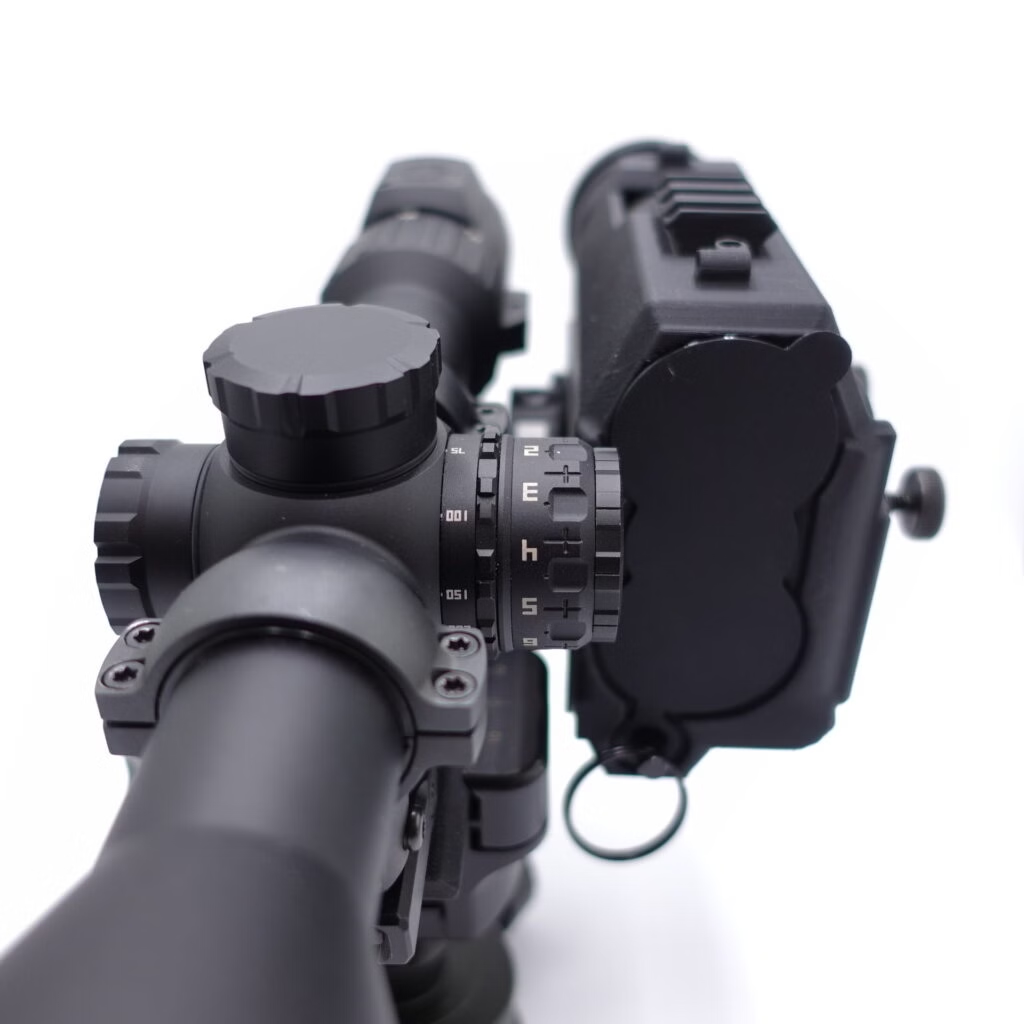
With the Sightlok RF-1, you can:
- Use the handheld rangefinder you already own
- Quickly detach the RF-1 from the rail when you want to range a target you don’t want to point your muzzle at, and reattach when you’re done, while maintaining an accurate co-witness between your rangefinder and scope
See how to turn the rangefinder you already own into a better WMLRF than the Arken TL3000
Is the Arken TL3000 worth it?
How far can the Arken TL3000 actually range?
Arken rates the Arken TL3000 to 3,000 yards on reflective targets, 2,000 yards on a tree trunk and 1,100 yards on deer.
If I don’t already own a good handheld rangefinder, which one should I use with the Sightlok RF-1?
Pick a rangefinder based on how far you shoot. For ultra-long distances, you may need a Sig KILO8K-ABS or a Sig KILO5K. Most shooters can use almost any decent handheld rangefinder, and the rangefinder doesn’t have to be a Sig. Work out the distances and conditions you shoot in, and buy a rangefinder that handles them. Most shooters don’t need a KILO8K-ABS and would never use most of its range.
Who is Sightlok?
Sightlok publishes factual, unbiased reports and reviews on electro-optics gear, especially weapon-mounted laser rangefinders (WMLRF). We are the world’s leading independent expert on WMLRF options. We also design and build the Sightlok RF-1. We help you find gear that fits your needs and avoid gear that doesn’t.
Where does this information come from?
We base these reports on our own field experience with the products, on conversations with our customers, and on posts from respected members of forums like Snipershide, Rokslide and LongRangeHunting.
Did we miss anything in this report?
Disagree with anything here?
We want to hear from you. Leave your feedback below.
Your comment appears right away. You don’t need to register or verify your email address.
Ready to Build a Better WMLRF?
Keep the rangefinder you already own, mount it on your rifle, and co-witness it to your scope.

Infinity Guarantee
If your Sightlok RF-1 is ever damaged or defective, we repair or replace it at no charge.
Transferable · No receipt · No time limit

30-Day Money Back
Return it new and unused within 30 days of delivery for a refund of the price you paid.
No restocking fees · Return policy
New here?
Mount your rangefinder to your weapon
The Sightlok RF-1 is a Picatinny / Weaver rail mount that turns the handheld rangefinder you already own into a weapon-mounted laser rangefinder.