
Q: Should I buy a Vortex Impact 4000?
A: Short answer: probably not. The Vortex Impact 4000 has loyal owners, but many of them have never used anything better, so they have nothing to compare it with. Below, we explain what’s wrong with the Vortex Impact 4000 and what to buy instead.
Q: What problems does the Vortex Impact 4000 have?
A: These are the Vortex Impact 4000’s seven biggest problems:
Excessive beam divergence and a diagonal beam pattern. Due to the excessive beam divergence, the laser can easily hit brush, trees and ground around your target, leading to potentially wildly inaccurate readings. More info here.
A Bluetooth remote instead of a wired one. Leave the remote connected and it drains your batteries. Switch the Vortex Impact 4000 off and you wait for it to boot up and re-pair before every range. More info here.
Short battery life in the cold. The battery drains fast in winter, and the readings become unreliable before the battery dies. More info here.
A display that slows down in the cold. The screen lags and can stop working, so you can’t read a range when you need one fast. More info here.
A compass calibration routine many owners can’t complete. You also have to redo the calibration every time you move to a new location. More info here.
A night display that can’t be dimmed. The screen lights up your rifle and your face, ruins your night vision and can give away your position. More info here.
Weaker ballistic software. The Vortex Impact 4000 runs Vortex’s own GeoBallistics solver instead of Applied Ballistics, and holds only 10 ballistic profiles. More info here.
Q: What’s the best alternative to the Vortex Impact 4000?
Q: What’s better than a Vortex Impact 4000?
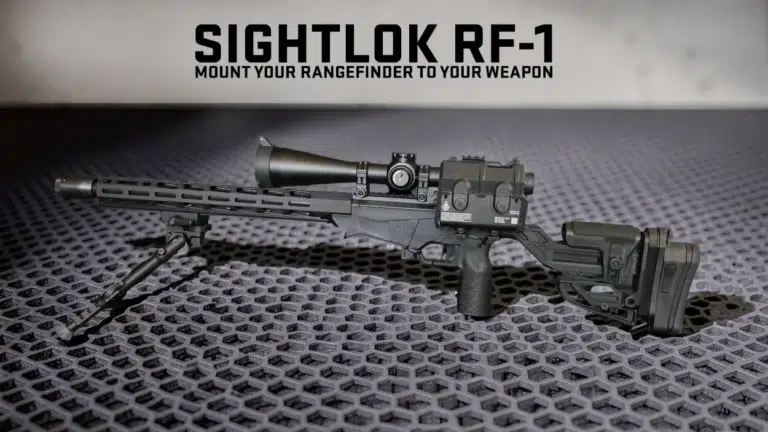
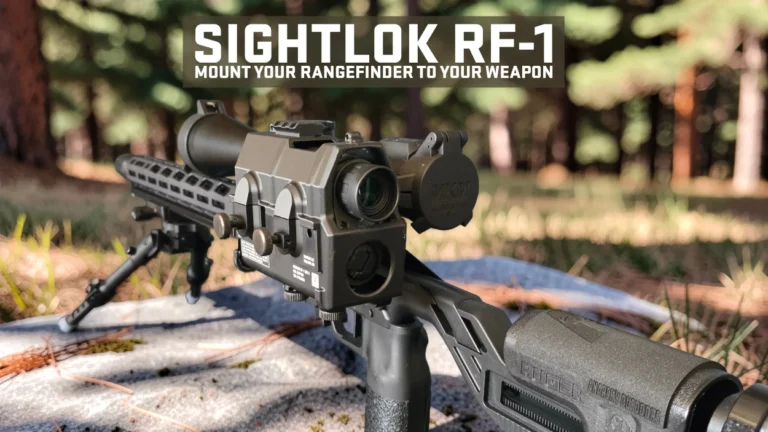
A: An increasingly popular solution to the “WMLRF problem” is mounting a handheld rangefinder to your rifle using a Sightlok RF-1 rangefinder mount.
The approach has some disadvantages. Overall, however, it’s a more flexible, modular, and cost-effective solution that, depending on the rangefinder you deploy, can actually deliver more accurate results in the field.
The finished setup looks like this:
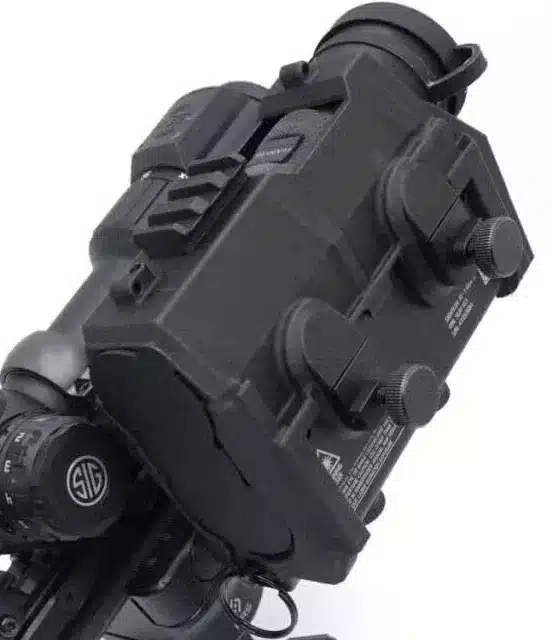
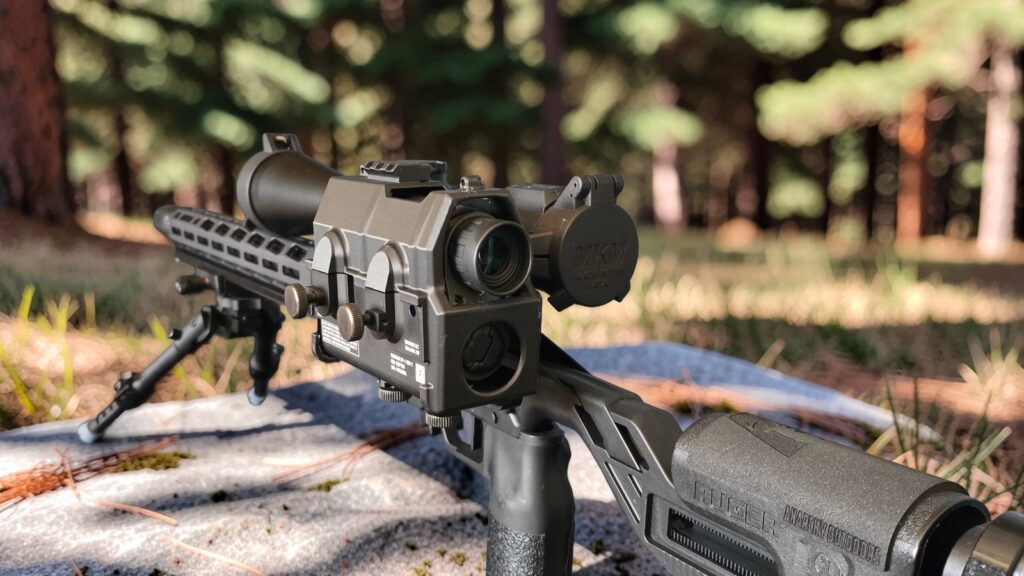
The Sightlok RF-1 protects your rangefinder from recoil, bumps, and scratches. A polymer hood protects the rangefinder as a whole, and hard rubber covers protect the laser aperture and eyepiece.
Q: What are some key advantages of the Sightlok RF-1 vs the Vortex Impact 4000?
A:
Quick Detach to range objects you don’t want to point your muzzle at
Keep rangefinder warm in your pocket until needed to avoid cold weather failures
Use superior handheld lasers with superior ballistic software
Roughly $1000 cheaper
Q: What about recoil? Can’t it damage my rangefinder?
A: Handheld rangefinders are designed to survive drops of about 3 feet, and the impact from a 3-foot drop can generate several thousand psi of pressure. The RF-1 spreads recoil so evenly that no spot on your rangefinder takes more pressure than your thumb puts on the range button, a few dozen psi at most. A few dozen psi is well under 1% of the pressure your rangefinder is built to survive in a 3-foot drop. At that margin, the chance of a .308 shot damaging a healthy rangefinder in the RF-1 is effectively zero. In two years of selling the Sightlok RF-1, no customer has reported a rangefinder damaged by recoil. Read our full analysis of the recoil question and watch recoil test videos.
What about recoil? Won’t my rangefinder be damaged if I mount it to my rifle?
To understand the probability of damage from recoil to your rangefinder, we must take into account how much force is being applied by common rifle cartridges like the .308, how that force is distributed, and roughly how close that comes to the amount of force necessary to actually damage your rangefinder.
How much force?
The amount of force is not that great. For example, in the case of a .308, the cumulative force of the recoil is about equal to the force of you picking up your rangefinder and squeezing it hard for a few thousandths of a second.
How is the force distributed?
Beyond the actual amount of force is an even more critical factor: How the force is distributed. The Sightlok RF-1 uses 3M impact-absorbing rubber to hold the rangefinder and evenly distribute the recoil forces while simultaneously shielding sensitive areas like the buttons, the laser aperture lenses, the ocular, and the ocular lenses from impact. Lastly, when the rangefinder is held in the RF-1 mount, recoil force travels straight back along the bore axis, rather than to corners or edges where impact forces can cause more damage. The result of these mitigating factors is that recoil generates about the same amount of pressure on your rangefinder as you exert when you press the range button.
Typical standards for rangefinder durability
Handheld rangefinders are designed to survive drops of about 3 feet, and the impact from a 3-foot drop can generate several thousand psi of pressure.
How close does recoil come to causing damage?
The RF-1 spreads recoil so evenly that no spot on your rangefinder takes more pressure than your thumb puts on the range button, a few dozen psi at most. A few dozen psi is well under 1% of the pressure your rangefinder is built to survive in a 3-foot drop. At that margin, the chance of a .308 shot damaging a healthy rangefinder in the RF-1 is effectively zero.
No reported failures
In two years of selling the Sightlok RF-1, no customer has reported a rangefinder damaged by recoil.
Recoil tests on video
Below, a US military rifleman tests the Sightlok RF-1 with recoil from two common cartridges.
Sig Sauer KILO1000BDX versus .308 rifle recoil:
Sig Sauer KILO1000BDX versus 6.5 Creedmoor rifle recoil:
Q: What about the rangefinder remote? Don’t I lose that feature with the Sightlok RF-1?
A: Yes, you do lose that feature. The Vortex Impact 4000 has a Bluetooth remote. A Sightlok RF-1 setup typically does not have one (unless you are using a rangefinder with a wired remote like the LE032). This means rather than triggering your rangefinder with your right hand by pressing a remote switch near the trigger, you typically mount your rangefinder on the left or top of your scope, and press the range button with your left hand while holding your rifle with your right. This works fine if you shoot off a tripod, bipod, bag, etc., but it’s a disadvantage if you shoot with nothing to support your rifle except your left arm. The Vortex Impact 4000’s Bluetooth remote has its own problems, which we describe in problem 2.
Q: What about weight? Does the Sightlok RF-1 solution weigh more?
A: Slightly more than the Vortex Impact 4000.
| Part | Vortex Impact 4000 | Sig KILO2200 + Sightlok RF-1 |
|---|---|---|
| Rangefinder | 16 oz for the whole unit | Sig Sauer KILO2200: 7.5 oz |
| Rangefinder mount | Sightlok RF-1: 7 oz | |
| Quick-detach kit | Not needed | Sightlok QD accessory: about 0.9 oz |
| Protective cover | Not needed | Sightlok polymer protective cover: about 2.6 oz |
| Total | About 16 oz (1 lb) | About 18 oz |
| Difference | The Sig KILO2200 + Sightlok RF-1 weighs about 2 oz more | |
You carry an extra 2 ounces, but reap the massive benefit of lower beam divergence from almost any decent handheld, which is a game-changer when it comes down to ranging a target in brush. The tradeoff is easily worth it.
Q: What about the Vortex Impact 4000 vs the Tango Fire4000?
A: We think the Tango Fire4000 is better overall. Read our report on the Tango Fire4000.
👉 Below you’ll find the full breakdown, with field reports from owners on shooting forums and answers to the questions buyers ask most.
Or jump straight to an answer: Is the Vortex Impact 4000 worth it? · How far can the Vortex Impact 4000 actually range? · If I don’t already own a good handheld rangefinder, which one should I use with the Sightlok RF-1? · See all FAQs
1. The Vortex Impact 4000’s Beam Divergence and Diagonal Beam Pattern Make It Unreliable Around Brush and Clutter
Visual Proof of the Problem

This night vision photo shows the Vortex Impact 4000’s 45° slash beam pattern.
Numerical Proof of the Problem
Here’s how the Vortex Impact 4000’s beam divergence compares with three Sig handheld rangefinders:
| Rangefinder | Beam divergence | Beam pattern | Widest beam spread at 500 yards |
|---|---|---|---|
| Vortex Impact 4000 | 2.0 x 0.2 MRAD | “Slash-shaped,” canted 45° | 36 inches |
| Sig KILO2200 | 1.4 MRAD | Round (30% narrower) | 25 inches |
| Sig KILO5K | 1.3 MRAD | Round (35% narrower) | 23 inches |
| Sig KILO8K-ABS | 1.2 x 0.25 MRAD | Rectangular, wider than tall (40% narrower) | 22 inches |
Result of the Problem
Due to the excessive beam divergence, the beam hits more branches, grass and ground around the target, resulting in more false or blended readings than you’d find with better quality, lower beam divergence rangefinders.
What Vortex Impact 4000 Users Report
Forum users keep blaming the slash-shaped beam for one problem: the unit can’t isolate the target, so it often ranges something nearby. Other users say the beam picks up the ground or nearby objects instead of the target. Also see here and here.
2. The Vortex Impact 4000’s Bluetooth Remote Causes Problems in the Field
Don’t buy a WMLRF with a Bluetooth remote. Get one with a wired remote, or one where you press the range button on the unit itself, as you can with a handheld rangefinder in a Sightlok RF-1 mount.
With a Bluetooth remote, you have two bad choices. Keep the remote connected all the time, and you drain the batteries in both the remote and the rangefinder. Those batteries don’t last long in the field anyway. Or switch the unit off between uses, and wait for the unit to boot up and re-pair every time you want a range. The wait is far too long on a timed stage, or when an animal won’t stand still while your rangefinder reconnects.
3. Nearly Every Vortex Impact 4000 Used at the Mammoth Sniper Challenge Failed
In one of several Sniper’s Hide threads on the Impact 4000’s cold-weather problems, a member said about 30 shooters used Impact 4000s at the Mammoth Sniper Challenge, and almost all of them had complete failures or serious ranging problems once the cold set in.
In the same thread, an owner training at 15°F in light snow got only about 15 minutes of battery life, even with the backlight off. Once the low-battery icon started flashing, the ranging became unreliable.
4. The Vortex Impact 4000 Display Slows Down and Can Stop Working in the Cold
Owners say the Impact 4000’s display gets sluggish as the temperature drops, lags behind the ranging, and sometimes stops working, and then you can’t read the range. The same owner saw the screen go blank for a moment every time the laser fired.
5. Many Owners Can’t Finish the Vortex Impact 4000 Calibration
The Impact 4000 needs calibration, and the calibration routine is slow and hard to get right. Read the comments on this walkthrough video and you’ll see owner after owner say they couldn’t finish. You also have to calibrate again every time you move to a new location.
Most handheld rangefinders don’t need calibration, so you can put one in a Sightlok RF-1 mount and start ranging right away.
6. The Vortex Impact 4000 Display Is Blindingly Bright at Night
Range a target after dark, and the Impact 4000’s screen lights up your rifle and your face. The light can give away your position, and the light ruins your night vision, which takes about half an hour to build up. Many owners complain about the bright display.
Here’s how bright the display gets:

You can’t dim the backlight: it has only two settings, on and off. Owners stick window tint film over the screen, or turn the backlight off and read the screen with a small flashlight. You shouldn’t have to do either on a $1,500 rangefinder.
7. The Vortex Impact 4000’s Ballistic Software Is a Step Down From the Industry Standard
The Impact 4000 runs GeoBallistics, Vortex’s own ballistic solver. Most high-end long-range rangefinders run Applied Ballistics, a solver made by a separate company. GeoBallistics uses the unit’s built-in compass, temperature, pressure and humidity sensors, plus a patented Wind Bearing Capture Mode.
Applied Ballistics has a long track record in rangefinders, scopes and Kestrel products from many manufacturers, and shooters measure every other solver against Applied Ballistics. Vortex built GeoBallistics for its own products only, so GeoBallistics has no track record with other manufacturers. Buy the Impact 4000 and you depend on the Vortex solver alone. You also get fewer ballistic profiles (10 customizable profiles in the companion app, versus up to 25 across 8 groups on comparable Applied Ballistics units).
What Does a Sightlok RF-1 Setup Cost Compared With the Vortex Impact 4000?
| Part | Vortex Impact 4000 | Sig KILO2200 + Sightlok RF-1 |
|---|---|---|
| Rangefinder | $1,500 for the whole unit | Sig Sauer KILO2200: $130 |
| Rangefinder mount | Sightlok RF-1: $200 | |
| Quick-detach kit | Not needed | Sightlok QD accessory: $90 |
| Protective cover | Not needed | Sightlok polymer protective cover: $70 |
| Total | $1,500 | $490 |
| Difference | The Sig KILO2200 + Sightlok RF-1 costs $1,010 less | |
The KILO2200 has no environmental sensors. For built-in sensors, choose a Sig KILO3K or higher.
What Does a Setup With Built-In Environmental Sensors Cost?
| Part | Vortex Impact 4000 | Sig KILO3K + Sightlok RF-1 |
|---|---|---|
| Rangefinder | $1,500 for the whole unit, with built-in temperature, pressure and humidity sensors and a digital compass | Sig Sauer KILO3K: $275, with built-in temperature, pressure and humidity sensors |
| Rangefinder mount | Sightlok RF-1: $200 | |
| Quick-detach kit | Not needed | Sightlok QD accessory: $90 |
| Protective cover | Not needed | Sightlok polymer protective cover: $70 |
| Total | $1,500 | $635 |
| Difference | The Sig KILO3K + Sightlok RF-1 costs $865 less | |
If you already own a decent handheld rangefinder, you only buy the Sightlok RF-1, QD accessory and cover, $360 in all, and pay $1,140 less than the Vortex Impact 4000. The cheaper option is also the better one.
Build a Better WMLRF Than the Vortex Impact 4000
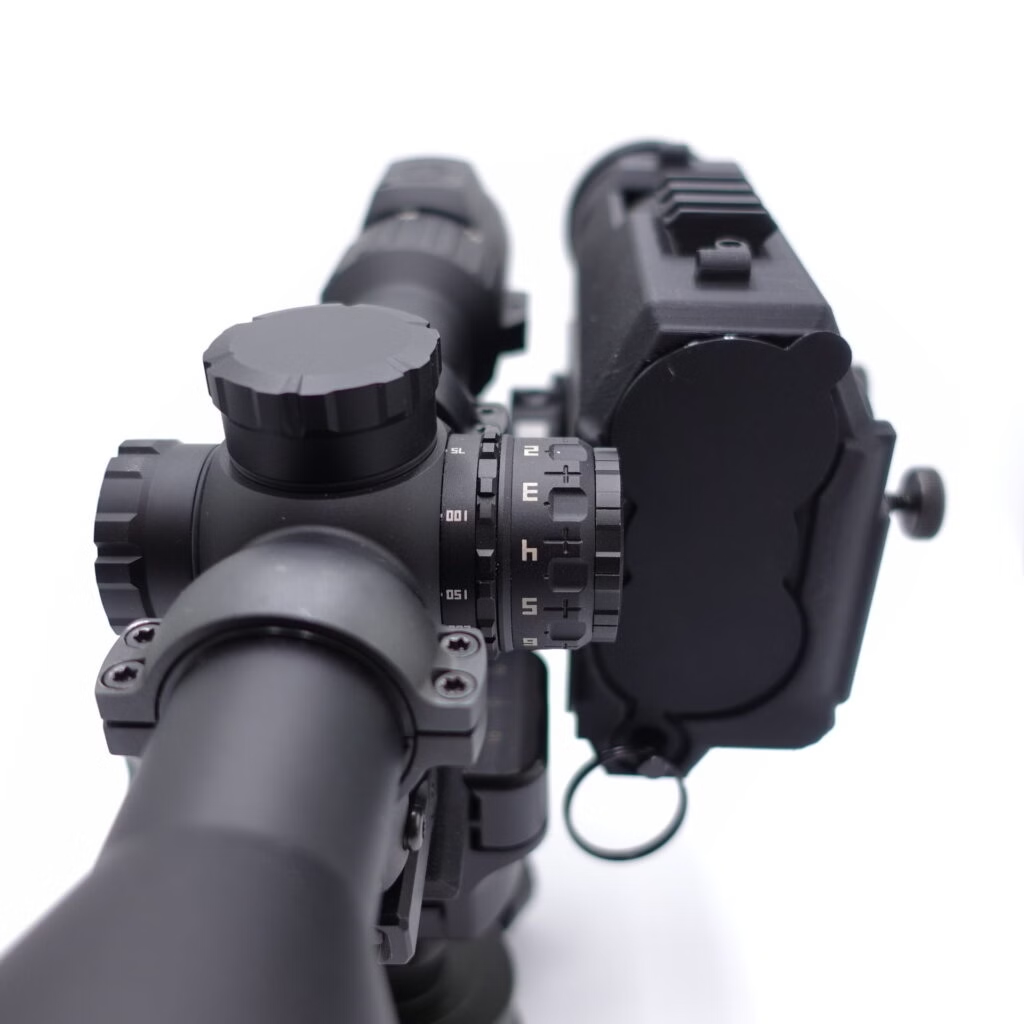
With the Sightlok RF-1, you can:
- Use the handheld rangefinder you already own
- Get lower beam divergence than the Vortex Impact 4000 from almost any decent handheld, like the $130 Sig KILO2200
- Quickly detach the RF-1 from the rail when you want to range a target you don’t want to point your muzzle at, and reattach when you’re done, while maintaining an accurate co-witness between your rangefinder and scope
See how to turn the rangefinder you already own into a better WMLRF than the Vortex Impact 4000
Is the Vortex Impact 4000 worth it?
How far can the Vortex Impact 4000 actually range?
Much less than 4,000 yards once anything is near the target. Vortex’s 4,000-yard figure comes from reflective targets in ideal test conditions, not from ranging game in cover. See problem 1 for what owners get in the field.
If I don’t already own a good handheld rangefinder, which one should I use with the Sightlok RF-1?
Pick a rangefinder based on how far you shoot. For ultra-long distances, you may need a Sig KILO8K-ABS or a Sig KILO5K. Most shooters can use almost any decent handheld rangefinder, and the rangefinder doesn’t have to be a Sig. Plenty of ordinary handhelds outrange the Vortex Impact 4000 and have lower beam divergence. The $130 Sig Sauer KILO2200, for example, has a better laser and better software than the Vortex Impact 4000. Work out the distances and conditions you shoot in, and buy a rangefinder that handles them.
Who is Sightlok?
Sightlok publishes factual, unbiased reports and reviews on electro-optics gear, especially weapon-mounted laser rangefinders (WMLRF). We are the world’s leading independent expert on WMLRF options. We also design and build the Sightlok RF-1. We help you find gear that fits your needs and avoid gear that doesn’t.
Where does this information come from?
We base these reports on our own field experience with the products, on conversations with our customers, and on posts from respected members of forums like Snipershide, Rokslide and LongRangeHunting.
Did we miss anything in this report?
Disagree with anything here?
We want to hear from you. Leave your feedback below.
Your comment appears right away. You don’t need to register or verify your email address.
Ready to Build a Better WMLRF?
Keep the rangefinder you already own, mount it on your rifle, and co-witness it to your scope.
 Try the Sightlok RF-1 for 30 days. If you don’t like it, send it back for a full refund, with no restocking fees, no return shipping fees and no questions.
New here?
Mount your rangefinder to your weapon
The Sightlok RF-1 is a Picatinny / Weaver rail mount that turns the handheld rangefinder you already own into a weapon-mounted laser rangefinder.